
Secure high-leverage financing for luxury resorts, boutique stays, and franchise hotels. Clopton Capital provides Australian investors and owner-operators with bespoke hotel financing to acquire, refinance, or develop hospitality assets across every major city and tourist region.

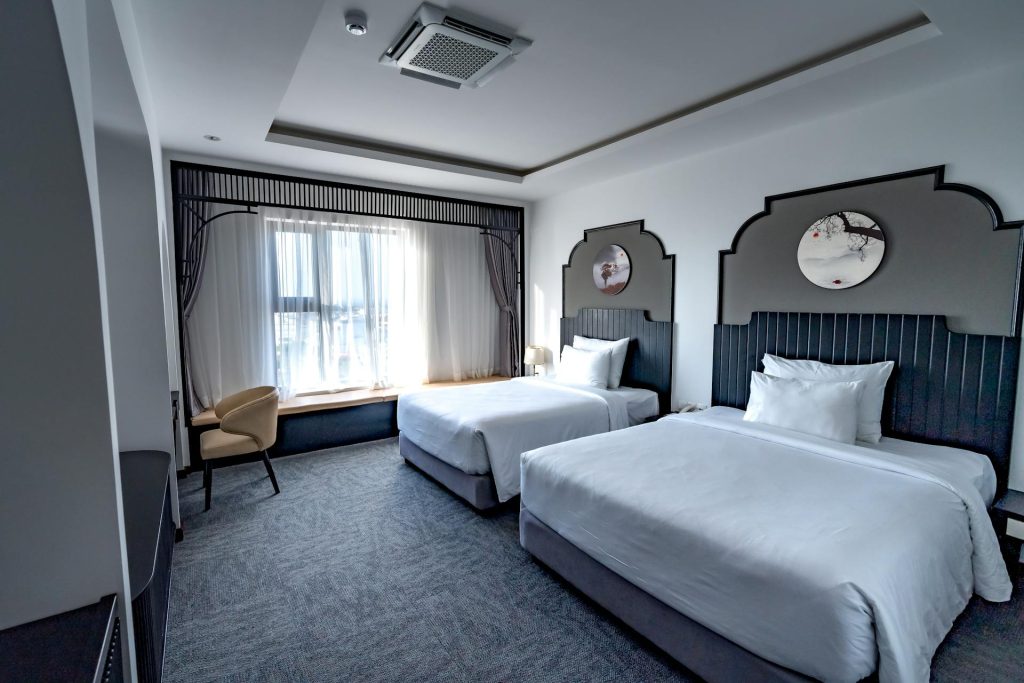
In recent times, the Australian hospitality sector has seen a massive influx of capital as tourism fundamentals return to record highs. Hotel financing is a specialised form of commercial lending that treats the property not just as real estate, but as an active operating business.
Because hotel income fluctuates daily—unlike the fixed monthly rent of an office or retail shop—lenders underwrite these loans using specific hospitality metrics like RevPAR (Revenue Per Available Room) and ADR (Average Daily Rate). Whether you are purchasing a “Big Four” holiday park or developing a 5-star CBD hotel, Clopton Capital matches your vision with the right capital—from domestic “Big Four” banks to global private equity funds.
In the current market landscape, hotels offer one of the best hedges against inflation due to their ability to adjust room rates in real-time.
High-Yield Potential: Successful Australian hotels often outperform traditional asset classes like industrial or retail on a cash-on-cash basis.
Operational Flexibility: Investors can choose between “Owner-Operator” models, “Management Agreements” with global brands (like Marriott or Accor), or passive “Leasehold” structures.
Major Event Tailwinds: With Australia’s upcoming global sporting and cultural event calendar (through 2026 and beyond), demand for quality accommodation remains structurally undersupplied.
Repositioning Gains: Investors can unlock significant value through PIP (Property Improvement Plans), upgrading older assets to higher brand tiers to capture increased room rates.
We arrange diverse capital solutions tailored to the hospitality lifecycle:
Acquisition Loans: Funding for buying existing franchised or independent hotels nationwide.
Hotel Construction Finance: Specialised facilities for ground-up developments, often including “Mezzanine” or “Preferred Equity” to reduce the developer’s cash outlay.
Hotel Bridge Loans: Short-term capital used to acquire an underperforming asset, fund a renovation (PIP), and “stabilise” the business before moving to long-term debt.
Refinance & Cash-Out: Unlock equity from a high-performing property to fund your next acquisition or pay off a maturing mortgage.
Lending for Australian hotels focuses on the DSCR (Debt Service Coverage Ratio) and the strength of the operator/brand.
| Feature | Typical Australian Terms |
| Loan Amount | 1,000,000 AUD to 100,000,000+ AUD |
| Leverage (LVR) | Up to 60% – 70% (75%+ for strong brands/Sponsors) |
| Rates | Variable or Fixed; Margin over BBSW |
| Amortisation | Up to 25–30 years (Interest-only available) |
| Recourse | Available as Recourse or Non-Recourse |
To provide a reliable hospitality term sheet within 24–72 hours, we require:
STR Reports: Historical performance data (Occupancy, ADR, RevPAR) compared to your “Competitive Set.”
Trailing 24-Month P&L: A detailed breakdown of departmental income (Rooms, F&B, Events).
PIP Details: If a renovation is required by the brand, we need the estimated budget and timeline.
Management Agreement: A summary of who is running the hotel and the fee structure.

Leverage our expertise to find a loan that scales with your hospitality portfolio.
Lenders often perceive franchised hotels (e.g., Hilton, IHG) as lower risk because of the global distribution systems and brand loyalty. This can lead to slightly better interest rates or higher leverage compared to independent “boutique” hotels.
Yes. While large institutional banks prefer metro CBD assets, we have a network of regional credit unions and private lenders that specialise in the high-yield motel and regional hospitality market.
Yes. Hospitality valuations in Australia typically use the Capitalisation of Net Operating Profit (Going Concern) method, which includes the land, the building, and the business goodwill.
In recent times, non-recourse options have become more prevalent for stabilised, branded hotels with a strong track record. This limits the lender’s recovery to the property itself, protecting your personal assets.